

.svg)

EN/ES
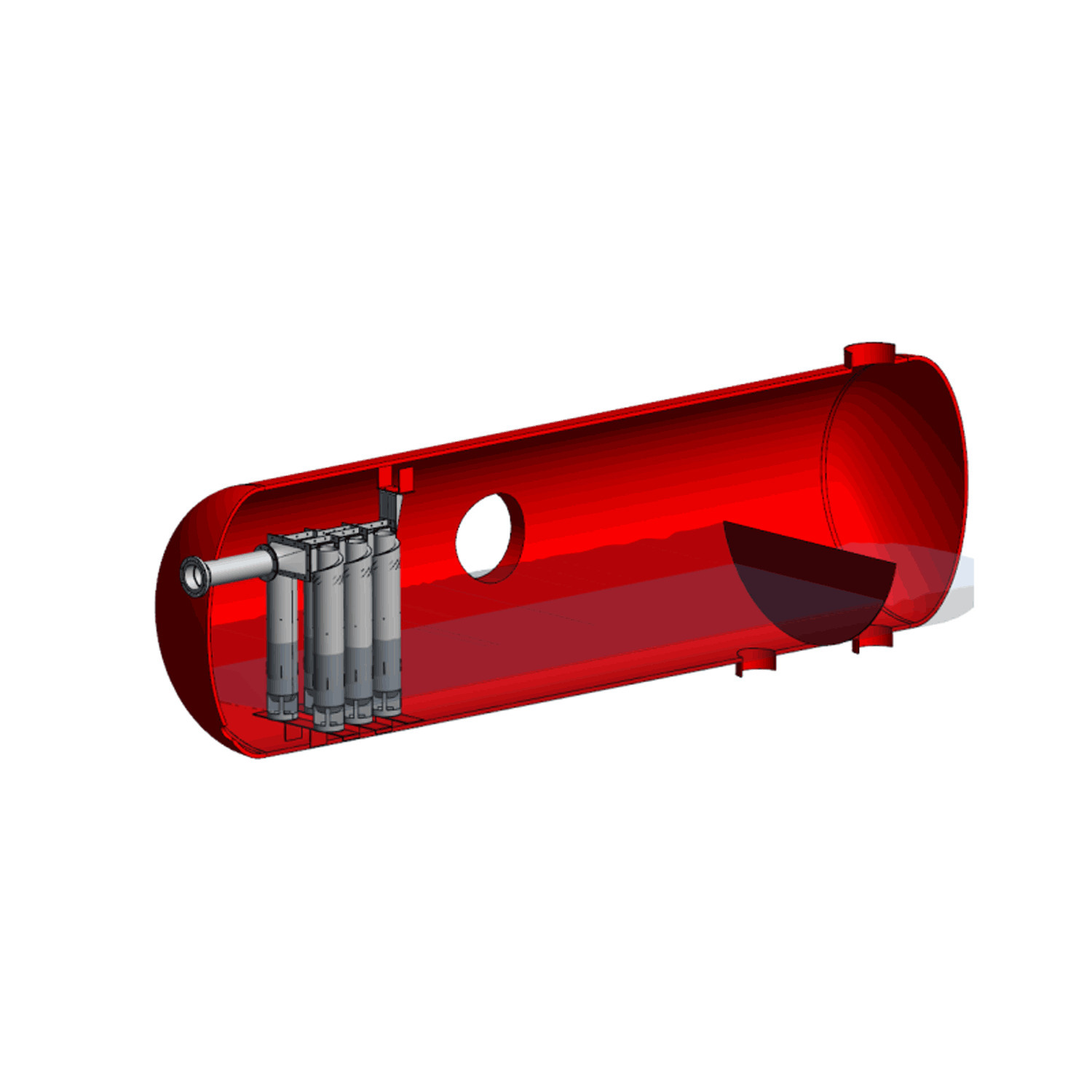
The inlet cyclone assembly comprises one or more vertical cyclone tubes installed at the vessel inlet nozzle to perform primary gas-liquid separation before the stream enters the main vessel body. Fluids pass downward through a static swirl element generating centrifugal force, pushing liquid to the cyclone wall while gas reverses direction and exits from the top. Liquid exits from the bottom into the vessel liquid section.
The inlet cyclone separates both bulk liquid and a portion of incoming mist, and handles high inlet momentums effectively. The liquid outlets at the bottom of each tube must remain submerged in the vessel liquid level across all operating cases for correct hydraulic balance. TrayTec supplies and installs inlet cyclone assemblies to your vessel specification.
Reduces inlet momentum
High gas/liquid separation
Enhances liquid-liquid separation
For more information please visit our Contact page

The inlet cyclone separates both incoming bulk liquid and a portion of the incoming mist within the cyclone tubes, reducing the liquid and mist load on the downstream mist eliminator. A vane-type diffuser dissipates momentum and distributes gas uniformly but does not provide the same degree of mist separation. The inlet cyclone is also better suited to high inlet momentum conditions. Contact TrayTec to confirm which inlet device is appropriate for your vessel and process conditions.
The liquid outlets at the base of each cyclone tube must remain submerged in the vessel liquid level at all operating conditions, including minimum liquid level and turndown cases. If the outlets are not submerged, gas will bypass the cyclone and short-circuit directly into the liquid section, degrading separation performance. The number of tubes and their outlet elevations are designed per vessel to ensure submergence is maintained across the full operating range. Contact TrayTec with your vessel liquid level range and operating cases to confirm the design.
Yes. Inlet cyclone retrofits are specified when an existing separator is experiencing liquid carryover or mist eliminator flooding at increased throughput, and the root cause is traced to inadequate inlet separation. The retrofit design must account for the existing nozzle size, vessel liquid level range, and internal clearances. Contact TrayTec with your vessel drawing and current operating conditions to assess retrofit feasibility.
