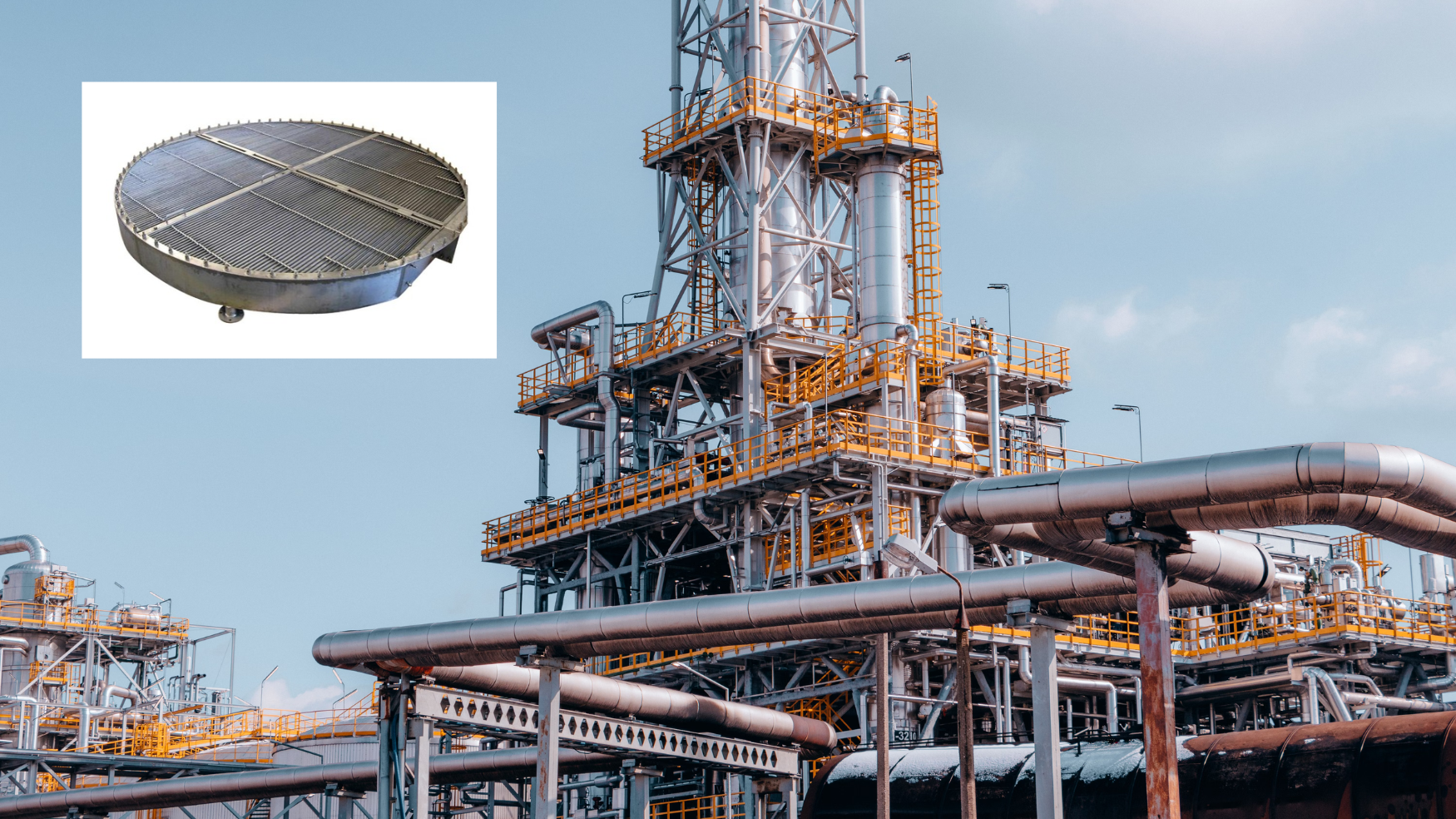
A mist eliminator is one of the smallest components inside a separator, scrubber, or tower. However, it's job is very critical; capture liquid droplets from the gas stream so only clean, dry gas moves downstream. When it fails, the damage rarely stays inside the vessel. Liquid carries over into downstream equipment, and the cost shows up weeks or months later in places far more expensive to repair.
How Mist Eliminators Fail
The failure modes are few and well known. Salts, scale, and solids plug the pad, raising pressure drop and forcing droplets through instead of capturing them. Pressure surges during process upsets lift, tear, or crush a pad, especially when a hold-down grid is loose or missing. Gaps at the vessel wall or between sections let gas bypass the pad entirely, usually the result of improper installation. And over time, corrosion weakens the wire mesh and support grid until the assembly sags or breaks apart.
Where the Damage Shows Up
Once liquid gets past the mist eliminator, it travels to equipment never designed to handle it. Carryover into compressors damages valves and internals and shortens equipment life. In amine and glycol systems, solvent leaves with the treated gas and has to be replaced. Liquid and dissolved solids foul heat exchangers, contaminate catalyst, and push products off-spec.
Any of these can force an unplanned shutdown. And because the mist eliminator sits inside the vessel, it cannot be repaired until the vessel is isolated and opened. A component that costs thousands ends up driving losses measured in days of production.
Recognizing the Warning Signs
A failing mist eliminator usually gives warning. Rising pressure drop across the separator points to plugging. A sudden drop can mean the pad tore or shifted. Liquid in downstream knockout pots or compressor suction scrubbers, increasing solvent makeup, and compressor problems with no other clear cause all trace back to the same suspect. When several of these signs appear together, put the mist eliminator in the inspection scope for the next turnaround.
Preventing Failure During Turnarounds
The cheapest time to prevent a failure is when the vessel is already open. During a turnaround, inspect the pad or vane pack, support ring, and hold-down grid for fouling, corrosion, damage, and gaps. Confirm the design still fits the service: a mesh pad that keeps plugging may perform better as a vane pack or combination unit. Installation matters as much as design, with sections fitted tightly, sealed against the vessel wall, and secured in place.
Mist eliminators are custom-sized to the vessel and manway. Order replacements before the shutdown, not after the manway opens, and the schedule holds.
Mist Eliminator Installation & Services at Tray-Tec
Tray-Tec has installed process internals in towers, reactors, and drums since 2005. Our crews remove and install demister pads, mesh pads, and vane-type mist eliminators from any manufacturer, and inspect and repair the support ring, grid, and hold-down hardware that keeps them in place. If inspection uncovers damage to the vessel itself, Tray-Tec completes code repairs under our own ASME and National Board certifications, without bringing in a second contractor.
A properly maintained mist eliminator protects everything downstream. Regular inspection, the right design, and careful installation keep a small component from becoming a costly problem. Get in touch to plan your next inspection.